What Is F&I Appearance Protection and Why Do Dealerships Offer It?
What Is F&I Appearance Protection?
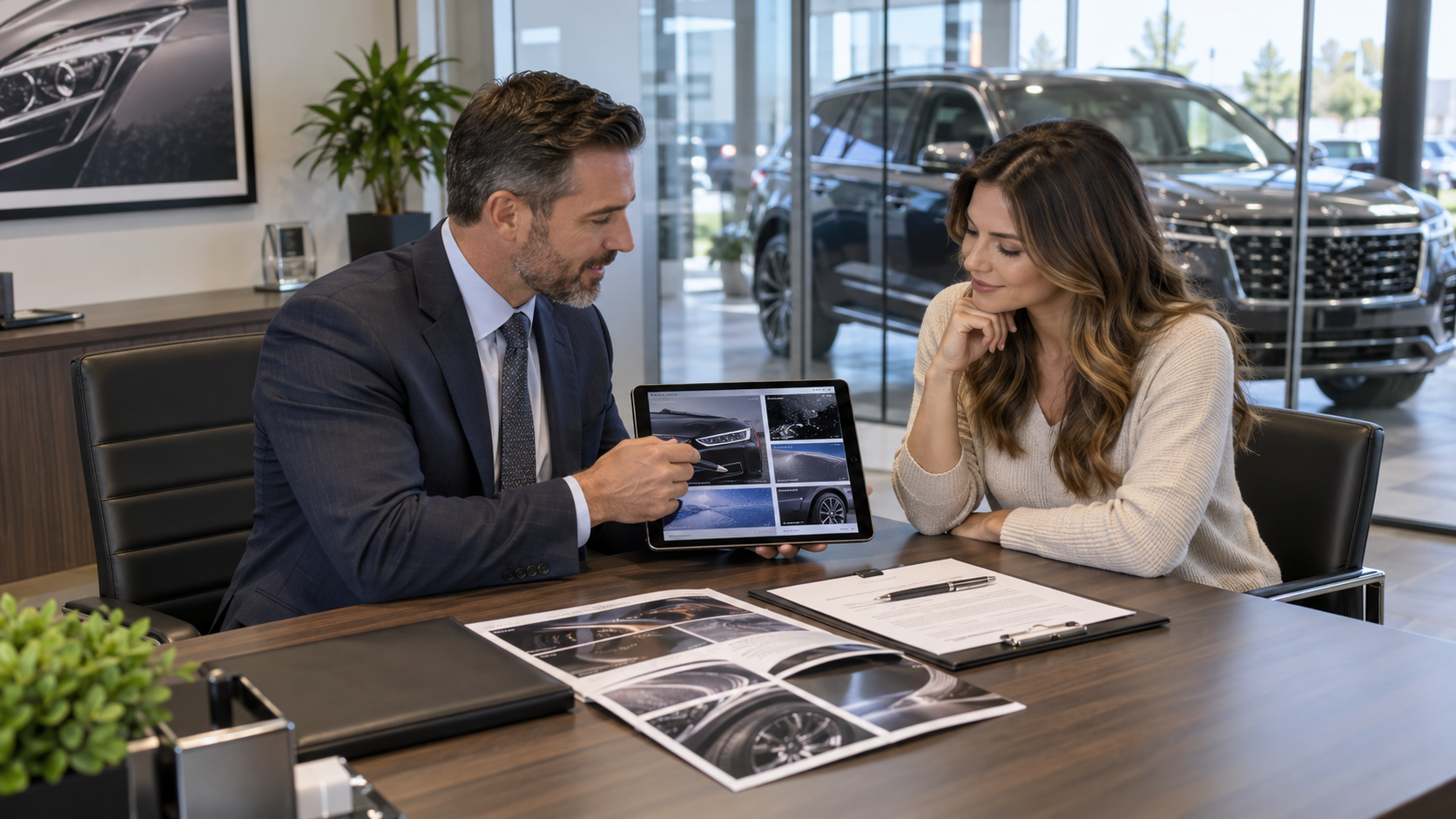
F&I appearance protection is an automotive protection product that dealerships can offer through the finance and insurance department to help customers preserve a vehicle’s interior and exterior condition. Depending on the selected program, coverage may help address eligible issues involving paint, fabric, leather, carpeting, stains, spills, fading, and certain environmental contaminants. For dealerships, the product can add another protection option to the F&I menu while helping customers protect the appearance and long-term condition of their vehicles.
Appearance protection is different from a mechanical Vehicle Service Contract because it focuses primarily on eligible cosmetic and surface-related risks rather than mechanical or electrical breakdowns. It can complement other dealership products such as tire and wheel protection, GAP coverage, theft protection, and service contracts to create a broader automotive protection strategy. The exact coverage, exclusions, claims procedures, and eligibility requirements depend on the specific program offered.
F&I Appearance Protection May Help Address:
- Paint and exterior surface protection
- Eligible stains and spills
- Fabric and upholstery protection
- Leather and vinyl protection
- Environmental contaminants
- Fading and oxidation
- Interior surface damage
- Other eligible cosmetic concerns
For dealerships, the value of appearance protection comes from offering customers a product that addresses a different type of ownership risk than mechanical coverage. A clear, well-supported program can help the F&I team explain how cosmetic protection fits into the broader ownership experience while giving customers another option for protecting their vehicle after purchase.
How Does F&I Appearance Protection Work?
F&I appearance protection is typically offered during the dealership’s finance and insurance process as an optional product designed to help protect the vehicle’s interior and exterior surfaces. The dealership explains the available benefits, coverage limits, exclusions, and claims process before the customer enrolls. Depending on the program, protection may begin at the time of purchase or after specific enrollment requirements are completed.
The Process May Include:
- Selecting an eligible appearance protection plan
- Reviewing covered interior and exterior surfaces
- Completing enrollment documentation
- Applying any required protection treatment
- Providing the customer with program terms
- Reporting an eligible appearance issue
- Submitting required claim information
- Receiving repair, treatment, or benefits according to the agreement
The strongest programs make the process easy for both the F&I team and the customer to understand. Clear enrollment procedures, defined benefits, and straightforward claims requirements can help reduce confusion while making the product easier to present during the sale.
For dealerships, Appearance Protection should fit naturally into the broader F&I product lineup and complement other automotive protection options without adding unnecessary complexity.
Why Do Dealerships Offer F&I Appearance Protection?
Dealerships offer F&I appearance protection because it gives customers an option to protect the look and condition of their vehicle beyond standard mechanical coverage. It can also help the F&I department address ownership concerns such as stains, environmental damage, fading, and other eligible cosmetic issues that traditional warranties or service contracts may not cover. When presented clearly, appearance protection can add practical value to the overall vehicle purchase experience.
Dealership Benefits May Include:
- A broader F&I product lineup
- Protection options beyond mechanical coverage
- More relevant choices for luxury and high-end vehicles
- Added value during the ownership conversation
- Stronger customer retention opportunities
- A more complete vehicle protection strategy
- Additional support for long-term vehicle appearance
- Better alignment with customer ownership concerns
Appearance protection works best when it is positioned as one part of a complete protection strategy rather than as a standalone add-on. Dealerships can pair Appearance Protection with other products such as vehicle service contracts, GAP coverage, tire and wheel protection, and theft protection to address different ownership risks.
What Should a Strong F&I Appearance Protection Program Cover?
A strong F&I appearance protection program should clearly define which interior and exterior surfaces are eligible, what types of damage or contamination may qualify, and how claims are handled. The program should also be easy for the F&I team to explain without relying on vague promises or overly broad language. Clear coverage terms help both the dealership and the customer understand what the product is designed to protect.
Coverage May Include:
- Exterior paint protection
- Eligible environmental contaminants
- Interior fabric protection
- Leather and vinyl protection
- Carpet and upholstery protection
- Eligible stains and spills
- Fading or oxidation protection
- Certain cosmetic surface concerns
- Defined repair or treatment benefits
- Clear claims and eligibility requirements
Not every appearance protection program offers the same benefits, so dealerships should review the actual contract before adding the product to the F&I menu. The strongest programs make coverage, exclusions, claims procedures, and customer responsibilities easy to understand.
A well-structured Appearance Protection program can give dealerships a more complete way to address cosmetic ownership risks while complementing other F&I products.
How Does Appearance Protection Fit Into a Dealership’s F&I Product Lineup?
Appearance protection fits into a dealership’s F&I product lineup by addressing cosmetic and surface-related risks that mechanical coverage does not. It can complement products such as vehicle service contracts, GAP coverage, tire and wheel protection, and theft protection to give customers a broader set of ownership protection options. A balanced product menu helps the F&I team match protection to the customer’s actual concerns rather than treating every buyer the same way.
Appearance Protection Can Complement:
The goal is not to overload the customer with products, but to explain how each option addresses a different type of risk. Appearance protection can be especially relevant for customers who want to preserve the look and condition of a new, luxury, exotic, or high-end vehicle.
When positioned clearly, Appearance Protection can help dealerships build a more complete F&I strategy while keeping the customer conversation focused on practical ownership needs.
What Should Dealerships Look for in an F&I Appearance Protection Provider?
Dealerships should evaluate an F&I appearance protection provider based on product clarity, claims support, training, customer service, compliance guidance, and how easily the program fits into the existing F&I process. A strong provider should make the coverage easy to understand for both dealership staff and customers while clearly defining benefits, exclusions, eligibility requirements, and claim procedures. The goal is to choose a program that is simple to present, reliable after the sale, and appropriate for the dealership’s inventory.
Key Features to Evaluate Include:
- Clear coverage terms
- Defined eligibility requirements
- Transparent exclusions
- Straightforward claims procedures
- Reliable customer support
- Dealer and F&I training
- Compliance guidance
- Easy access to product materials
- Support for new and used vehicles
- Ongoing dealership assistance
The provider should also be able to explain how appearance claims are handled, what documentation may be required, and how quickly customers can receive support when an eligible issue occurs. Clear communication and strong dealer support can make the program easier to manage over time.
A well-supported Appearance Protection program should function as part of a broader dealership protection strategy rather than simply another product on the F&I menu.
Why Does Dealer Training Matter for F&I Appearance Protection?
Dealer training matters because appearance protection needs to be explained accurately, consistently, and in a way that makes sense to the customer. The F&I team should understand the program’s benefits, exclusions, eligibility requirements, claims process, and how the product differs from mechanical coverage. Strong training can help staff present the product with confidence while reducing misunderstandings after the sale.
Training Should Help F&I Teams Understand:
- What the appearance protection program covers
- What is specifically excluded
- Which vehicles are eligible
- How to explain customer benefits clearly
- How claims are submitted
- What documentation may be required
- How the product fits with other F&I offerings
- Required disclosures and compliance considerations
- Common customer questions
- How to set realistic expectations
The strongest programs make it easy for dealership staff to understand the product before they begin presenting it to customers. Consistent training can also help ensure that the F&I team communicates the same information across every transaction.
Dealerships that want broader support across their protection-product lineup can also benefit from F&I Training & Compliance as part of a more complete F&I strategy.
How Can F&I Appearance Protection Support Customer Value?
F&I appearance protection can support customer value by helping protect the look and condition of a vehicle against certain eligible cosmetic risks. For customers who care about maintaining a clean, well-kept vehicle, this type of coverage can address concerns that mechanical warranties and service contracts typically do not. The value comes from clearly defined protection that fits how the customer plans to use and maintain the vehicle.
Customer Value May Include:
- Added protection for interior and exterior surfaces
- Support for eligible stains and spills
- Protection against certain environmental contaminants
- Help preserving vehicle appearance
- Coverage for selected cosmetic concerns
- A more complete ownership protection strategy
- Added confidence for luxury or high-end vehicle owners
- Clear claims support when an eligible issue occurs
Appearance protection can be especially relevant for customers purchasing new, luxury, exotic, or premium vehicles where cosmetic condition is an important part of ownership. The product should be presented clearly so customers understand what is included, what is excluded, and how to use the coverage if an eligible issue occurs.
When the program is matched to the customer’s actual needs, Appearance Protection can add meaningful value without overcomplicating the F&I conversation.
What Questions Should Dealerships Ask Before Choosing an Appearance Protection Program?
Before adding appearance protection to the F&I menu, dealerships should ask clear questions about coverage, exclusions, eligibility, claims, training, and provider support. The goal is to understand how the program works in practice, not just how it is presented in sales materials. Asking the right questions can help dealerships choose a program that is easier to manage and easier for customers to understand.
Key Questions to Ask Include:
- What interior and exterior surfaces are covered?
- What types of stains, damage, or contaminants may qualify?
- What exclusions apply?
- Which vehicles are eligible?
- Are new and used vehicles both eligible?
- How are claims submitted and reviewed?
- What documentation is required?
- What dealer training is included?
- What compliance support is provided?
- How are customers supported after the sale?
- How quickly can the program be implemented?
- Who handles ongoing dealer support?
The answers should give the dealership a clear picture of how the product will function from enrollment through claims. A provider that can explain coverage, responsibilities, and customer benefits clearly is generally easier for the F&I team to work with over time.
A well-structured Appearance Protection program should support both the customer experience and the dealership’s broader F&I strategy.
Frequently Asked Questions About F&I Appearance Protection
Dealerships often have practical questions about how appearance protection works, what it may cover, and how it fits into the F&I process. Program details can vary, so the most important factors are the actual coverage terms, exclusions, eligibility requirements, claims procedures, and provider support. These quick answers address some of the most common questions dealerships may have before offering appearance protection.
Is appearance protection the same as a vehicle service contract?
No. Appearance protection generally focuses on eligible cosmetic and surface-related risks, while a vehicle service contract typically addresses certain mechanical and electrical repairs.
Can appearance protection be offered on both new and used vehicles?
Depending on the program, eligible new and used vehicles may qualify for coverage.
Does appearance protection cover every scratch or stain?
Not necessarily. Coverage depends on the specific contract, including the types of damage, surfaces, exclusions, and claim requirements listed in the agreement.
Can appearance protection include both the interior and exterior?
Many programs may offer protection for eligible interior and exterior surfaces, although the exact benefits vary by plan.
Does the F&I team need training to offer appearance protection?
Training is recommended so staff can explain benefits, exclusions, claims procedures, and customer responsibilities accurately.
Can appearance protection be offered with other F&I products?
Yes. It can complement vehicle service contracts, GAP coverage, tire and wheel protection, theft protection, and other automotive protection products.
A strong program should make these answers easy for dealership staff and customers to understand. Clear documentation, training, and provider support can help the F&I team present Appearance Protection accurately while setting realistic expectations about how the product works.
Build a Stronger F&I Appearance Protection Strategy
A strong F&I appearance protection program should be easy to explain, easy to support, and clearly aligned with the customer’s vehicle ownership needs. Clear coverage terms, reliable claims support, dealer training, compliance guidance, and responsive customer service can all help the program deliver more value for both the dealership and the customer. The goal is to offer meaningful cosmetic protection without adding unnecessary complexity to the F&I process.
Dealerships should evaluate appearance protection based on how well the program fits their inventory, customer base, sales process, and broader protection-product strategy. A strong provider should support implementation, training, claims, and customer service throughout the relationship rather than simply offering the product and stepping away.
Explore Appearance Protection Programs for Your Dealership
Pneumas offers Appearance Protection and other automotive protection solutions designed to support dealerships with flexible F&I programs and dealer-focused support. Explore available options to learn more about program structure and customer benefits, or contact our team to discuss what may fit your dealership’s F&I needs.
About Pneumas
Pneumas provides automotive protection solutions for dealerships and vehicle owners across the United States, including Vehicle Service Contracts, Tire & Wheel Protection, GAP Coverage, Appearance Protection, Dent & Ding Protection, Windshield Protection, Key Replacement Protection, Roadside Assistance, and F&I Training & Compliance. Our goal is to help protect vehicles from unexpected repair costs and everyday ownership risks while supporting dealerships with flexible protection programs and F&I solutions; explore our Automotive Protection Products or contact our team to learn more.
Recent Posts